
Scoville Chart
Thirty chile peppers measured in Scoville heat units, from the sweet bell at zero to Pepper X at 2.69 million. Compare any two, turn SHU into capsaicin content, and see where the heat sits inside a pod and what makes it hotter.
1.Thirty peppers on one heat ladder
Each bar spans a pepper’s published range in Scoville heat units (SHU), on a log scale where every gridline is ten times hotter than the one before. The ring marks the midpoint on that scale; a diamond is a single laboratory result, such as a record test. Three reference points that are not peppers sit in their places for scale. Filter by species or by how the pepper is usually used.
Showing 30 peppers, mildest first; the hottest shown is Pepper X at 2,693,000 SHU.
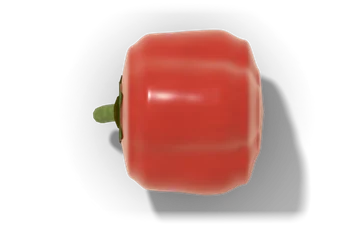
Bell pepper
C. annuum · fresh, roasting, stuffing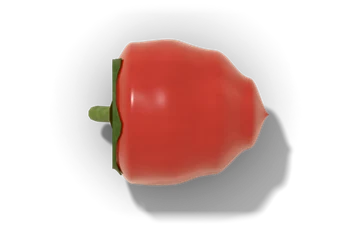
Pimiento
C. annuum · roasting, stuffing, pickling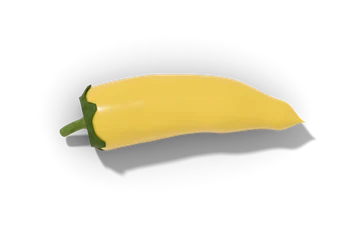
Banana pepper
C. annuum · pickling, fresh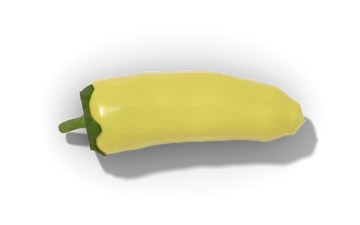
Cubanelle
C. annuum · roasting, fresh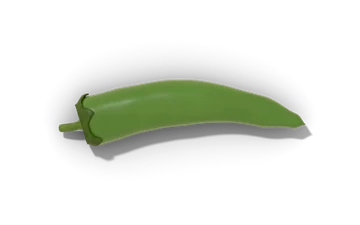
Anaheim
C. annuum · roasting, stuffing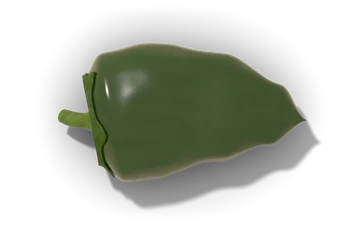
Poblano
C. annuum · roasting, stuffing, dryingTABASCO Original Red sauce
Bottled sauce: the peppers are diluted with vinegar and salt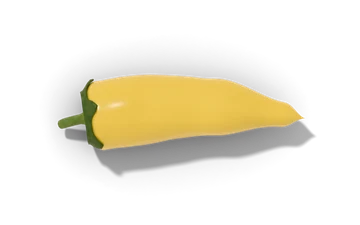
Hungarian wax
C. annuum · pickling, stuffing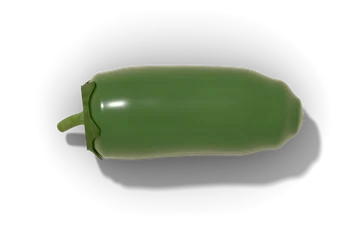
Jalapeño
C. annuum · fresh, pickling, stuffing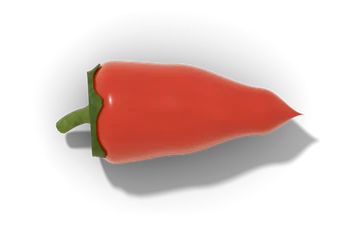
Fresno
C. annuum · fresh, hot sauce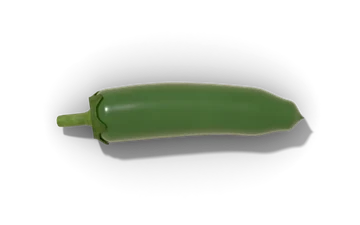
Serrano
C. annuum · fresh, hot sauce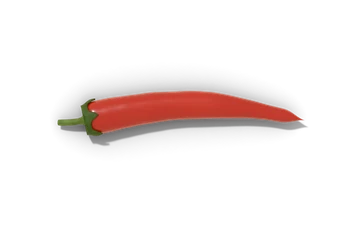
Chile de árbol
C. annuum · drying, hot sauce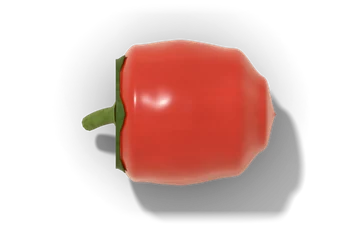
Rocoto
C. pubescens · stuffing, fresh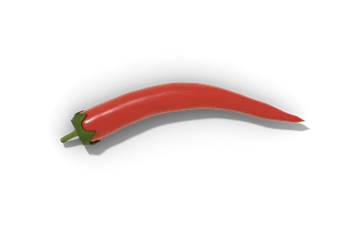
Cayenne
C. annuum · drying, hot sauce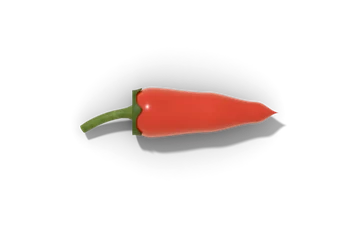
Tabasco
C. frutescens · hot sauce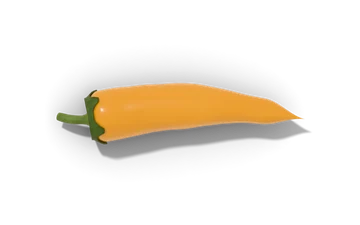
Ají amarillo
C. baccatum · fresh, hot sauce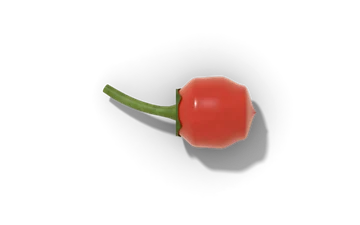
Chiltepin
C. annuum · drying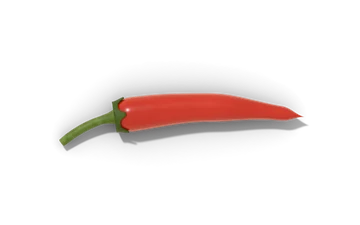
Thai chili
C. annuum · fresh, drying, hot sauce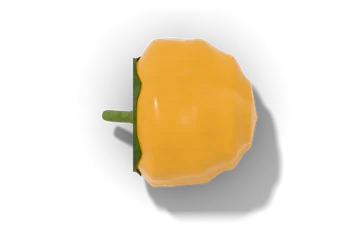
Scotch bonnet
C. chinense · hot sauce, fresh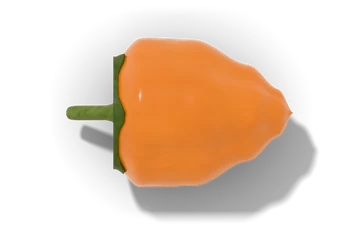
Habanero
C. chinense · hot sauce, fresh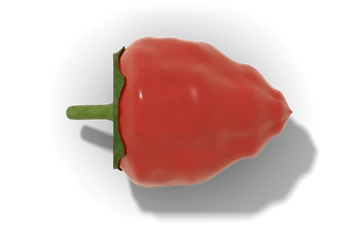
Red Savina
C. chinense · Guinness record 1994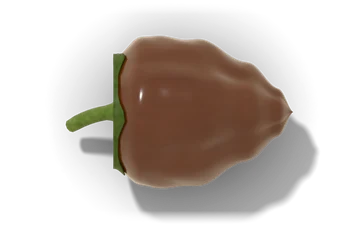
Chocolate habanero
C. chinense · hot sauce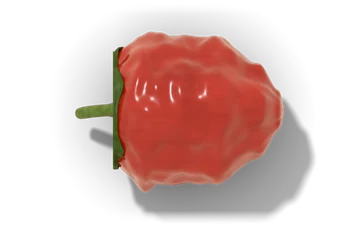
7 Pot
C. chinense · hot sauce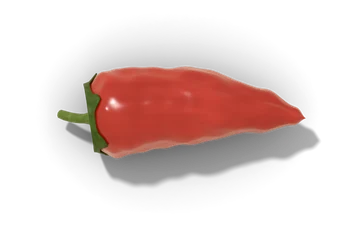
Ghost pepper
C. chinense · Guinness record 2007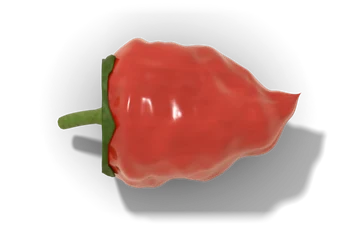
Trinidad Scorpion
C. chinense · hot sauce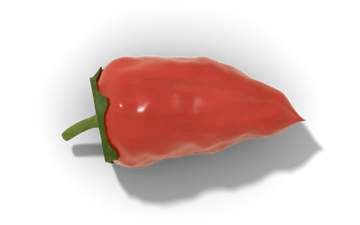
Naga Viper
C. chinense · Guinness record 2011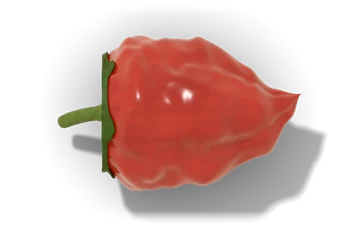
Trinidad Scorpion Butch T
C. chinense · Guinness record 2011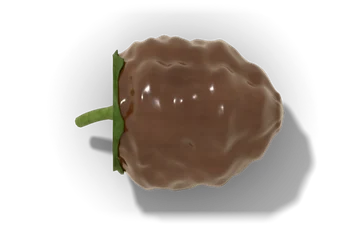
Chocolate 7 Pot
C. chinense · hot sauce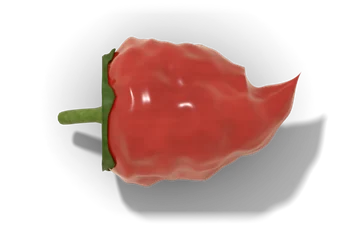
Carolina Reaper
C. chinense · Guinness record 2013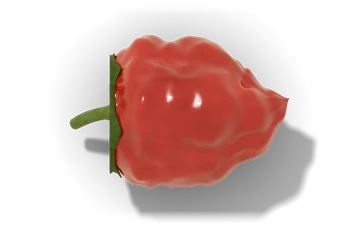
Trinidad Moruga Scorpion
C. chinense · hot saucePolice pepper spray
Strength depends on how the extract is diluted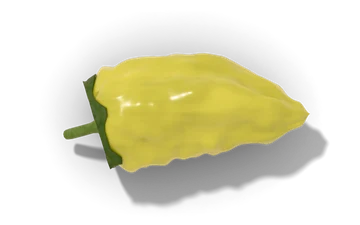
Pepper X
C. chinense · Guinness record 2023Pure capsaicin
The top of the Scoville scale for capsaicinoidsBands on this chart: sweet under 500 SHU, mild 500–2,500, medium 2,500–25,000, hot 25,000–100,000, very hot 100,000–350,000, extreme 350,000–1,000,000 and superhot above 1 million. Ranges vary between sources and with variety, growing conditions and ripeness.
2.How much hotter one pepper is
Because the scale is a ratio scale, “times hotter” is the natural way to compare two peppers. The figure uses the midpoints on the log scale; the note below gives the spread you might meet across the two published ranges.
A Carolina Reaper is about 360 times hotter than a jalapeño.
Across the published ranges the gap runs from about 200 to 660 times.
3.The record holders
Guinness World Records has named seven different peppers the world’s hottest since 1994. Breeders now cross the hottest lines over many generations; Ed Currie of South Carolina bred both of the last two title holders.
| Year | Pepper | Heat | SHU |
|---|---|---|---|
| 1994 | Red SavinaRecord held until 2006; never independently confirmed | 577,000 | |
| 2007 | Ghost pepperFirst certified pepper above 1 million SHU | 1,001,304 | |
| 2011 | InfinityBred in England by Nick Woods | 1,176,182 | |
| 2011 | Naga ViperBred in England by Gerald Fowler | 1,382,118 | |
| 2011 | Trinidad Scorpion Butch THeld the title until 2013 | 1,463,700 | |
| 2013 | Carolina ReaperBred by Ed Currie, South Carolina | 1,569,300 | |
| 2023 | Pepper XAlso bred by Ed Currie; tested at Winthrop University | 2,693,000 |
Guinness World Records titles. NMSU measured one Trinidad Moruga Scorpion plant above 2,000,000 SHU in 2012, but that was a study result, not a Guinness title.
4.What a Scoville unit measures
The scale began as a taste test and became a laboratory measurement, but the unit kept its name.
1912: the dilution test
- Wilbur Scoville, a pharmacist, soaked dried pepper in alcohol to pull out the heat.
- He diluted the extract in sugar water, step by step, and gave it to a panel of five tasters.
- When most of them could no longer feel any heat, the dilution factor became the rating: a 5,000 SHU pepper still tastes hot at one part extract in 5,000 parts sugar water.
Tasters tire and differ, so results from different labs could disagree by up to about ±50%.
Today: a laboratory measurement
Since the 1980s labs measure capsaicinoids with high-performance liquid chromatography (HPLC), in parts per million (ppm) of dried pepper. Multiplying by 15 (the American Spice Trade Association convention) or by 16 turns ppm into SHU. Pure capsaicin rates 16,000,000 SHU.
More than 22 capsaicinoids are known. In a typical pod capsaicin makes up about 69% of the total and dihydrocapsaicin about 22%.
Capsaicin works on TRPV1, the nerve receptor that also senses heat above about 43°C (109°F), which is why it feels like burning. Birds lack that response, eat the pods and spread the seeds.
SHU and capsaicin converter
- Capsaicinoids
- 281 ppm
- Share of the dried pod
- 0.03%
- Dilution in the 1912 test
- 1 part in 4,500 parts
- Compared with pure capsaicin
- 1/3,556 of its strength
- Heat band on this chart
- Medium
HPLC reports parts per million of the dried pod; the factor of 16 turns that into SHU.
5.Where the heat sits in a pod
Capsaicin is made in the placenta, the pale pith that holds the seeds, and most of it stays there and in the ribs. Select a numbered part on the halved jalapeño, or a name in the list.

Figure 2. A jalapeño cut lengthwise. From most heat to least: placenta, ribs, seeds by contact, then the walls.
6.Five domesticated species
About 26 wild Capsicum species are known, and five were domesticated. Almost every superhot belongs to Capsicum chinense, while most garden peppers, sweet or hot, are Capsicum annuum.
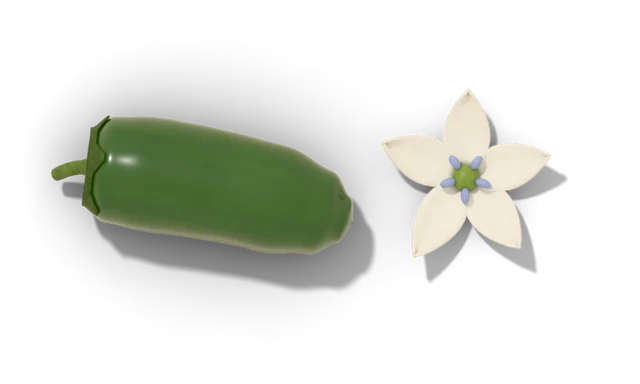
Capsicum annuum
Most grown species: sweet bells, jalapeño, cayenne, poblano, Thai chili
Includes both sweet and hot peppers.
14 on this chart: Bell pepper, Pimiento, Banana pepper, Cubanelle, Anaheim, Poblano, Hungarian wax, Jalapeño, Fresno, Serrano, Chile de árbol, Cayenne, Thai chili, Chiltepin
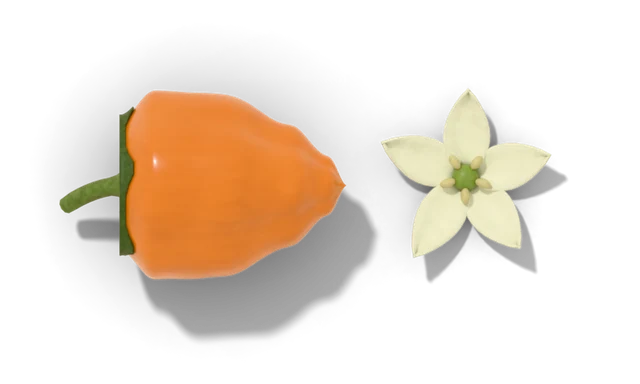
Capsicum chinense
Habanero, Scotch bonnet and every superhot on this chart
From the Amazon basin; fruity aroma.
13 on this chart: Scotch bonnet, Habanero, Red Savina, Chocolate habanero, Ghost pepper, Trinidad Scorpion, 7 Pot, Chocolate 7 Pot, Naga Viper, Trinidad Scorpion Butch T, Carolina Reaper, Trinidad Moruga Scorpion, Pepper X
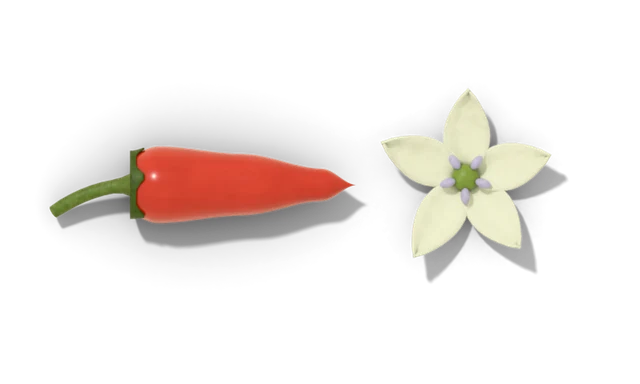
Capsicum frutescens
Tabasco and siling labuyo
Small pods that point upward.
1 on this chart: Tabasco
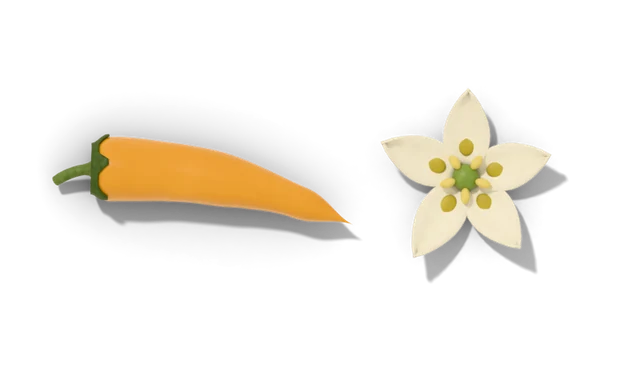
Capsicum baccatum
Ají amarillo, lemon drop, bishop’s crown
Cream flowers with green or gold spots.
1 on this chart: Ají amarillo
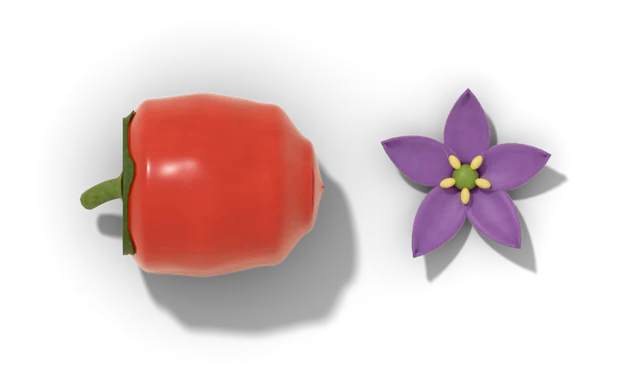
Capsicum pubescens
Rocoto (manzano)
Black seeds, hairy leaves, purple flowers; likes it cool.
1 on this chart: Rocoto
7.Cooling the burn
In a 2019 Penn State taste panel, 72 adults sipped a spicy Bloody Mary mix and then one of seven drinks, rating the burn every 10 seconds for two minutes. Every drink helped a little; milk and a sugary drink helped most.
| Drink | Result |
|---|---|
| Whole milk | largest drop in burn |
| Skim milk | largest drop in burn |
| Kool-Aid (sugar drink) | largest drop in burn |
| Water | smallest drop in burn |
| Seltzer | smallest drop in burn |
| Cola | smallest drop in burn |
| Non-alcoholic beer | smallest drop in burn |
- Why milk worksSkim milk worked as well as whole milk, so protein matters more than fat; sugar also helped. Capsaicin barely dissolves in water (about 0.0013 g per 100 mL).
- Water spreads it aroundCapsaicin barely dissolves in water, so a glass of water rinses little of it away; in the study water and fizzy drinks did least.
- Handle hot pods with careWear gloves to cut hot peppers, keep hands away from eyes, and wash with dish soap afterwards.
- Cut the heat before cookingRemoving the placenta and ribs takes out most of the capsaicin.
8.Growing for heat
Genes set the range, but the garden decides where in that range a pod lands. Two plants of the same variety, or two pods on one plant, can differ a great deal.

- Stress raises heatHeat and drought push plants to make more capsaicin; lean soil and sparse watering give hotter pods.
- Ripe pods are hotterChiles build capsaicin (and sugar) as they turn from green to their ripe colour.
- No two pods matchThe same variety varies from plant to plant and even pod to pod; up to about tenfold with conditions.
- Warm days, warm nightsBest at 70–85°F by day and 60–70°F at night; plant out after frost.
- Sun and spaceAt least 6 hours of sun; about 18 in between plants.
- Harvest70–85 days after transplanting; pick green or let pods ripen to colour.
Sources and notes
Scoville figures are published ranges, and they differ between sources and from pod to pod. Where sources disagree, this chart shows the range from the source named in each row’s note; midpoints are geometric means of the range. Records are Guinness World Records titles. This page is for general information about food and gardening.
- Penn State Extension: Growing Hot Peppers: Can You Make Them Hotter? (extension.psu.edu)
- Iowa State University Extension and Outreach: Growing Peppers in the Home Garden (yardandgarden.extension.iastate.edu)
- Clemson Cooperative Extension Home & Garden Information Center: Pepper (hgic.clemson.edu)
- Texas AgriLife Extension, J. Masabni: Jalapeño & Other Hot Peppers (aggie-horticulture.tamu.edu)
- UC Cooperative Extension Master Food Preservers of El Dorado County: Some Like it Hot! (or Not) Preserving Peppers, 2024 (ucanr.edu)
- New Mexico State University Chile Pepper Institute: Heat (cpi.nmsu.edu)
- NMSU Chile Pepper Institute super-hot study, 2012, as reported by Growing Produce: The Hottest Pepper On Earth
- NMSU Cooperative Extension Guide H-237: Measuring Chile Pepper Heat (pubs.nmsu.edu)
- Guinness World Records: Pepper X dethrones Carolina Reaper as world’s hottest chilli pepper, 16 Oct 2023
- Nolden, Lenart and Hayes (2019), Putting out the fire: efficacy of common beverages in reducing oral burn from capsaicin, Physiology & Behavior; Penn State release via ScienceDaily, 25 Jun 2019
- McIlhenny Company: TABASCO Original Red Sauce product page (tabasco.com)
- Wikipedia articles: Scoville scale; Hottest chili pepper; Capsaicin; and the individual pepper and Capsicum species articles cited per row