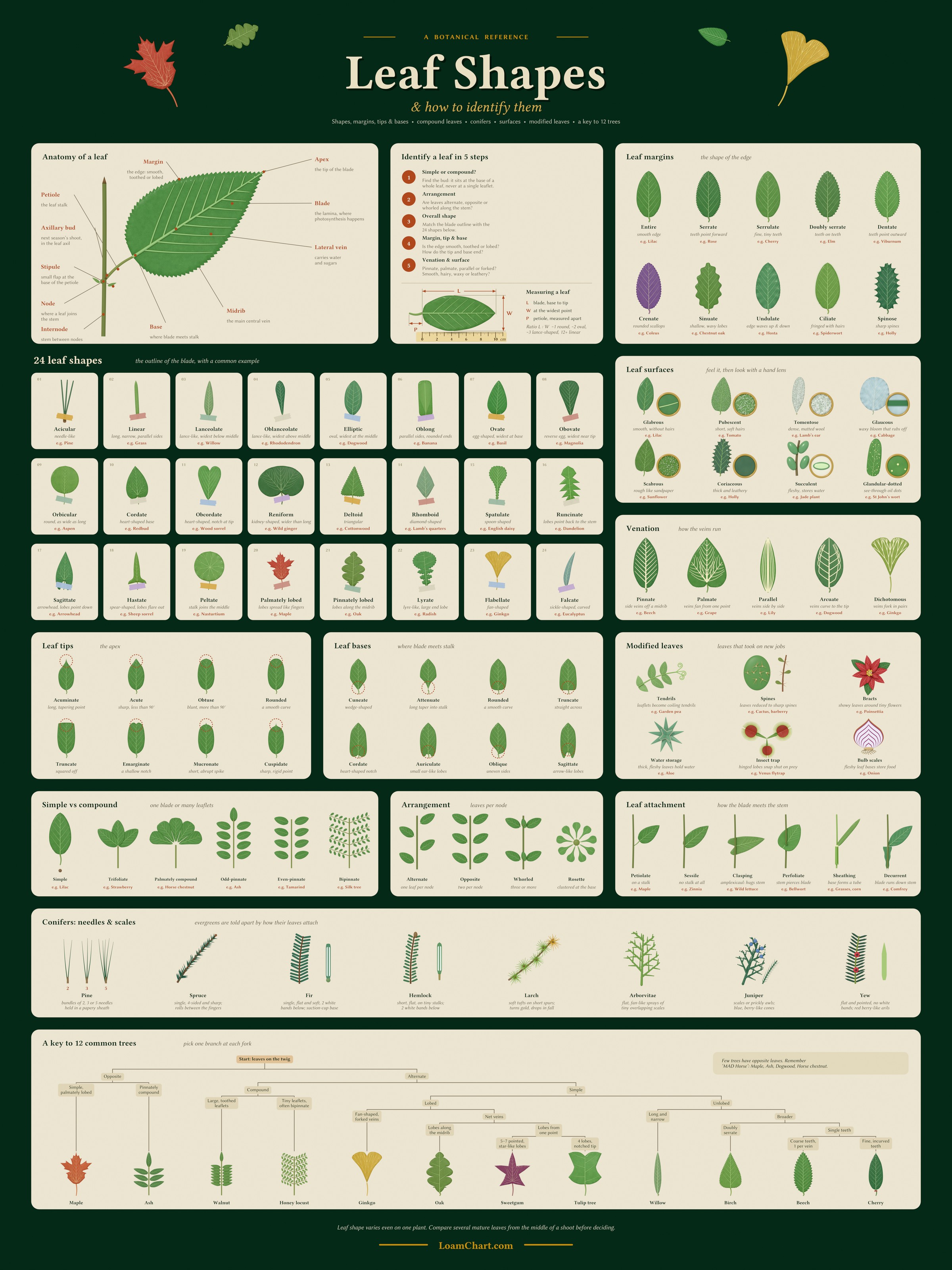
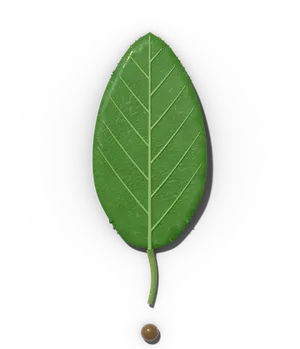
Simple
one undivided bladeA single blade on its petiole, with a bud in the axil.
e.g. Lilac LoamChart
Home Leaf Shape Chart
Read a leaf the way a botanist does: 11 labelled parts, 24 blade shapes, 26 margins, tips and bases, 21 ways leaves are divided, arranged, veined and attached, and 22 conifers, surfaces and modified leaves. A fork-by-fork key then names twelve common trees.
Know the parts before you name the shape. Select a numbered point on the specimen, or a term in the list, to see what each part is and why it matters for identification.

Part 8 of 11
the lamina, where photosynthesis happens
Its outline gives the leaf shape. Measure the blade’s length and width without the petiole.
Work from the whole leaf down to the details.
Find the bud: it sits at the base of a whole leaf, never at a single leaflet.
Compare compound typesAre leaves alternate, opposite or whorled along the stem?
See arrangementsMatch the blade outline with the 24 shapes below.
Browse the shapesIs the edge smooth, toothed or lobed? How do the tip and base end?
Compare edgesPinnate, palmate, parallel or forked? Smooth, hairy, waxy or leathery?
See venationLength to width tells you a lot.

Figure 3. Ratio L : W ≈ 1 round, ≈ 2 oval, ≈ 3 lance-shaped, 12 or more linear.
Enter your leaf's blade length and width (without the petiole), say where it is widest, and see which of the 24 outlines fit best. It starts with the leaf in the photo.
Ratios come from the outlines drawn on the chart, so treat matches as a starting point, then check margin, tip and base.
The same dichotomous key as the chart: pick one branch at each fork. Answer one question at a time and watch the twelve candidates narrow to one. Choose a tree in the candidate list to trace its path instead.
Remember ‘MAD Horse’. Few trees have opposite leaves: Maple, Ash, Dogwood, Horse chestnut.
The outline of the blade, each shown with a common example. Search, filter by family of shapes or sort by how narrow they are, then open a shape to compare it with the one it is most often confused with.
Showing 24 of 24 shapes
Compare the edges side by side. Choose a set, then pick any two specimens to put them next to each other. The dashed rings on tips and bases mark the part to look at.
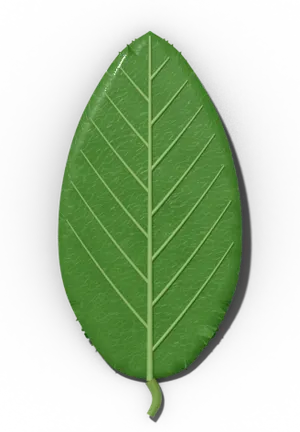
smooth edge
No teeth or lobes: the edge runs in one smooth line.
e.g. Lilac
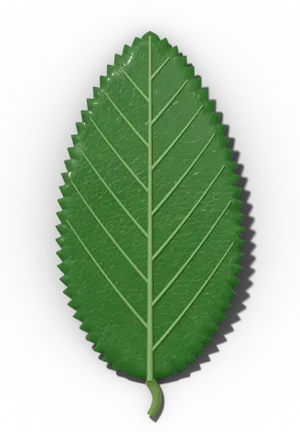
teeth point forward
Sharp teeth angled toward the tip, like a saw blade.
e.g. Rose
Leaves can be divided into leaflets, arranged along the stem in different ways, veined in five main patterns and attached to the stem with or without a stalk.
A single blade on its petiole, with a bud in the axil.
e.g. Lilac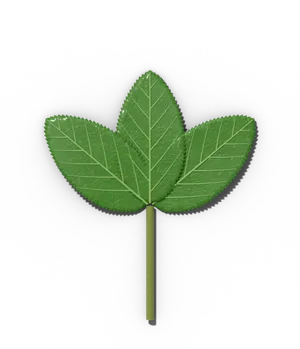
Three leaflets on one petiole.
e.g. Strawberry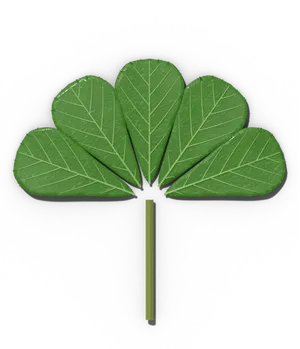
Five or more leaflets spreading from the tip of the petiole like fingers.
e.g. Horse chestnut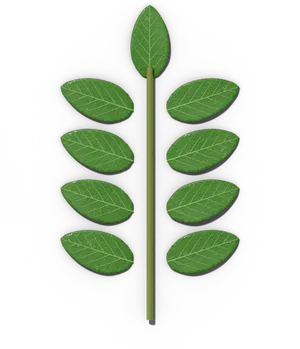
Paired leaflets along a central rachis, finished by a single terminal leaflet.
e.g. Ash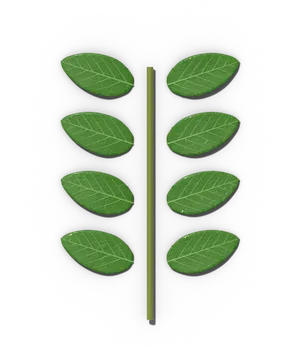
Paired leaflets along the rachis, with no terminal leaflet.
e.g. Tamarind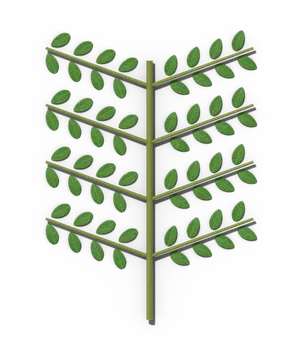
The rachis carries side branches (pinnae), each with its own small leaflets.
e.g. Silk treeEvergreens are told apart by how their leaves attach. Pick up a twig and answer three quick questions, or read the eight conifer groups below.
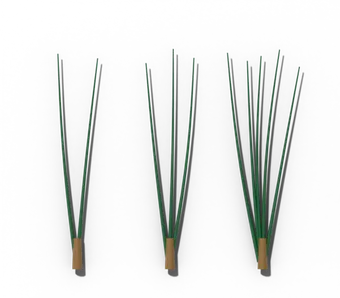
Needles come in bundles (fascicles) wrapped at the base by a papery sheath. Five-needle bundles point to the white pines; red and Scots pines carry two, loblolly and pitch pines three.
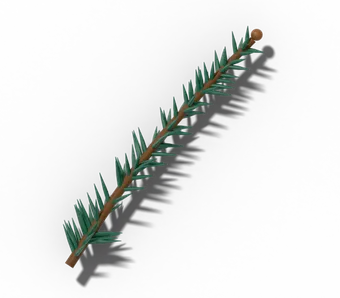
Single, stiff, four-sided needles, each on a tiny woody peg that stays on the twig and makes bare twigs rough.
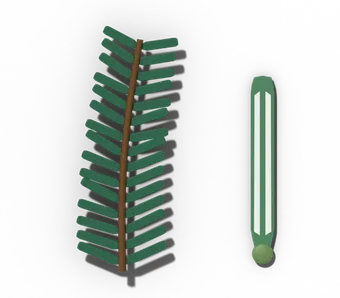
Single, flat, soft needles with two white stomatal bands beneath. Each needle leaves a round, suction-cup-like scar; the cones stand upright on the branches.
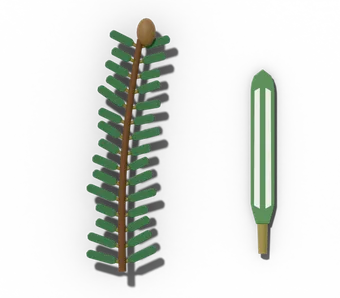
Short, flat needles on tiny stalks, with two white bands below. Small cones hang from the twig tips.
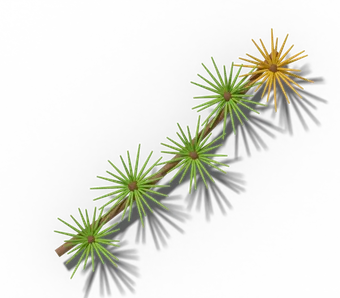
Soft needles in tufts of many on short spur shoots. A deciduous conifer: the needles turn gold and fall each autumn.
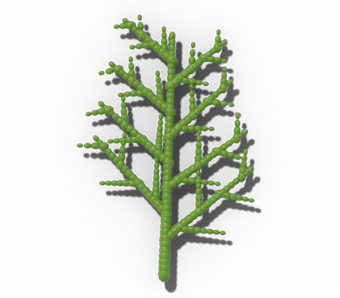
Tiny scale leaves pressed flat against the twigs, forming flattened, fan-like sprays.
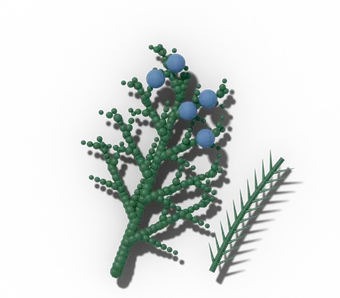
Scale leaves or sharp, awl-shaped needles, often both on one plant. The cones are fleshy, blue and berry-like.
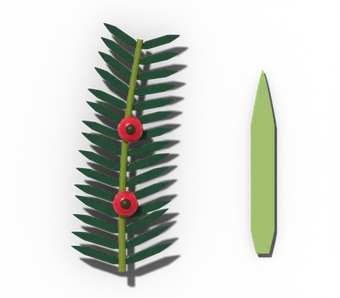
Flat, pointed needles that are green beneath with no white bands. Seeds sit in red, fleshy arils. The foliage and seeds are poisonous.
Feel it, then look with a hand lens. Texture is a quiet but reliable clue. Switch any specimen to the hand-lens view to see the surface magnified.
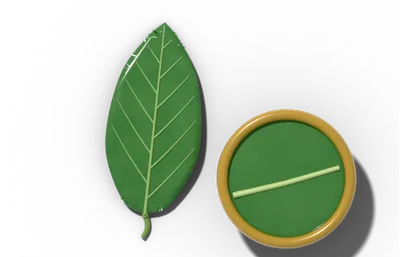
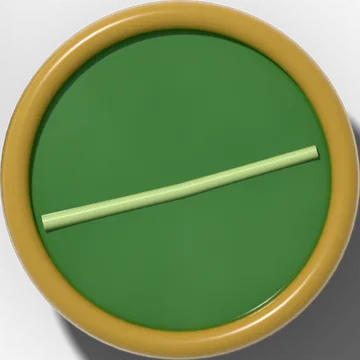
Smooth and hairless. It may be glossy or dull, but nothing catches your finger.
e.g. Lilac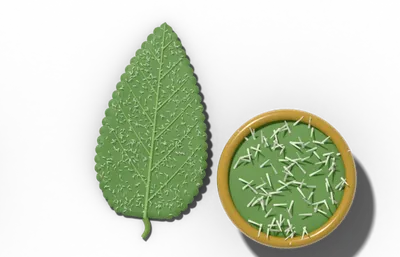
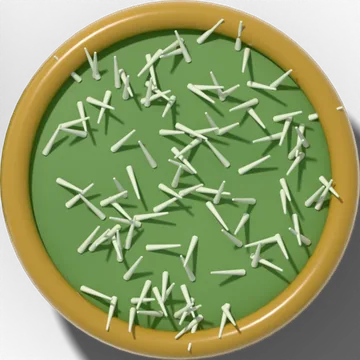
Covered with short, soft hairs that make it feel velvety.
e.g. Tomato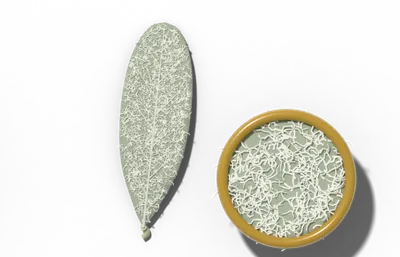
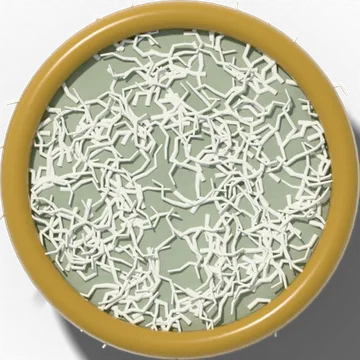
So densely woolly that the hairs hide the green surface beneath.
e.g. Lamb’s ear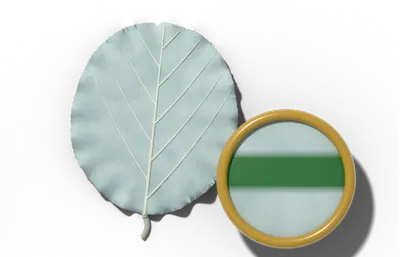
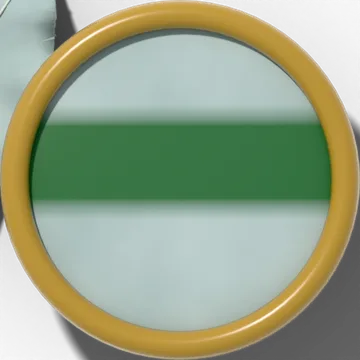
A whitish or bluish waxy bloom; rub it and a darker green stripe appears, as in the lens view.
e.g. Cabbage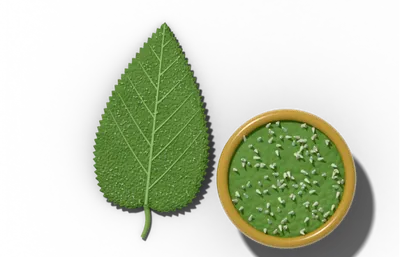
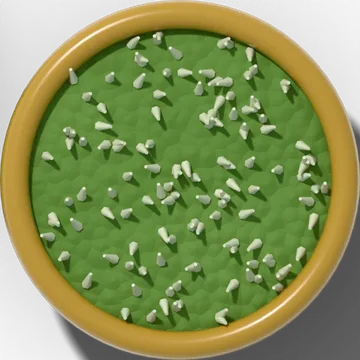
Rough to the touch, like sandpaper, from short stiff hairs or tiny bumps.
e.g. Sunflower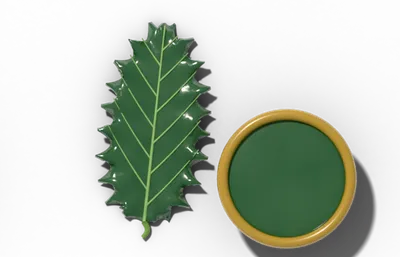
Thick, stiff and leathery, often with a glossy coat.
e.g. Holly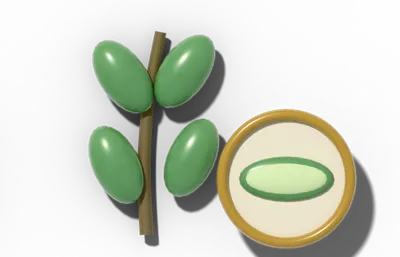
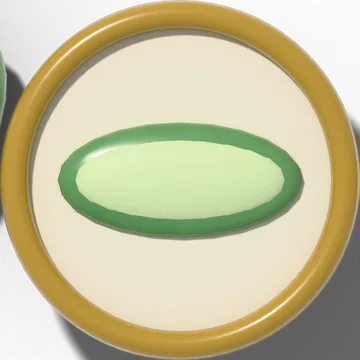
Thick and fleshy; a cut leaf shows pale, water-storing tissue inside.
e.g. Jade plant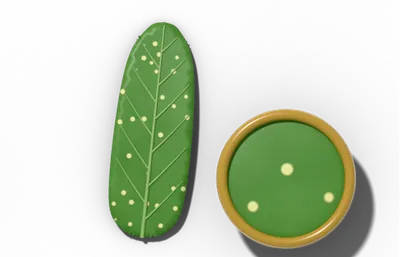
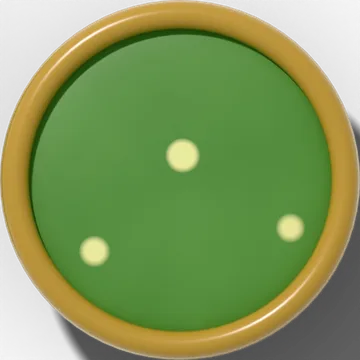
Hold it to the light: oil glands show as tiny translucent dots.
e.g. St John’s wortLeaves that took on new jobs. Not every leaf is a flat green blade. These all develop as leaves or leaf parts, but climb, defend, attract, store or hunt.
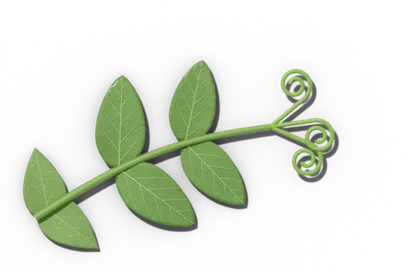
The end leaflets of each pea leaf grow as slender tendrils that coil around any support they touch.
e.g. Garden pea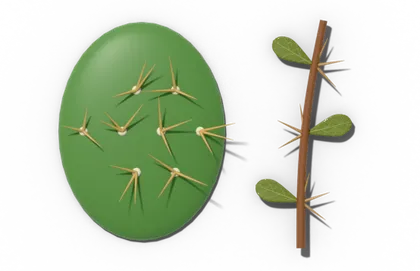
Cactus spines are leaves that grow from cushion-like areoles; on barberry, the leaves of long shoots become three-pronged spines.
e.g. Cactus, barberry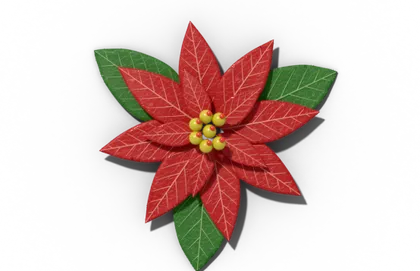
The red “petals” are leafy bracts. The true flowers are the small yellow cyathia in the centre.
e.g. Poinsettia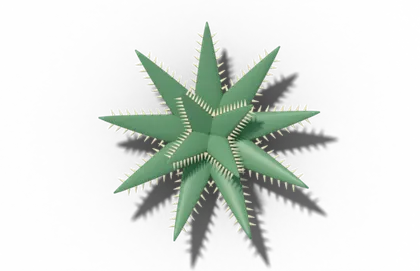
Thick leaves packed with water-storing gel carry the plant through drought.
e.g. Aloe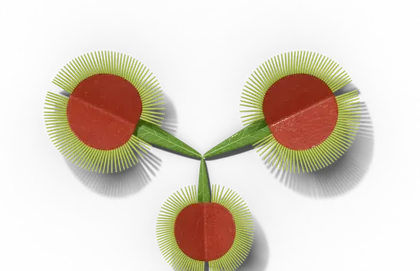
Each leaf ends in a hinged trap. Touching its trigger hairs twice in quick succession makes the lobes snap shut.
e.g. Venus flytrap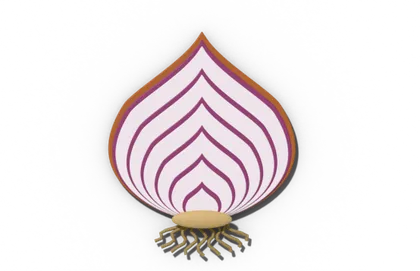
The rings of an onion are swollen leaf bases packed around a short, flat stem called the basal plate.
e.g. OnionEvery term on the chart, A to Z. Search or pick a category; each entry links back to the section where it appears.
111 of 111 terms
Leaf shape varies even on one plant. Compare several mature leaves from the middle of a shoot before deciding. The 12-tree key covers only the trees on the chart; use a regional flora or field key to confirm an identification. Length-to-width ratios are measured from the chart's drawn outlines and are approximate.
Terms follow standard botanical usage, as set out in the reference below.