
Horse Age by Teeth Chart
A horse's lower incisors keep a rough record of its age. Milk teeth and permanent teeth come in on a steady timetable up to five, and after that the cups wear away, dental stars appear, the tables change shape and Galvayne's groove runs down the upper corner tooth. Step through the ages, try the age key and see how far each sign can be trusted.
Contents
- 1The lower incisors from birth to 30
- 2An age key from what you see
- 3When each tooth comes in
- 4Reading Galvayne's groove
- 5Cups, stars and the shape of the table
- 6Milk teeth and permanent teeth
- 7Angle, hooks and length of tooth
- 8Dental checks through a horse's life
- 9How far a tooth age can be trusted
- Sources and notes
1.The lower incisors from birth to 30
Look at the six lower front teeth from above. Move the slider through 21 ages to see which teeth are milk or permanent, where the cups still show, and how the tables change. The same stages are drawn across the top two rows of the chart.

Young horse, 10 of 21
5 years
Full mouth: every permanent tooth in wear.
2.An age key from what you see
Answer what you can see in the mouth. Each sign narrows the likely age; where two signs disagree the key says so, because diet and wear move them apart. Skip any question you are unsure of.
3.When each tooth comes in
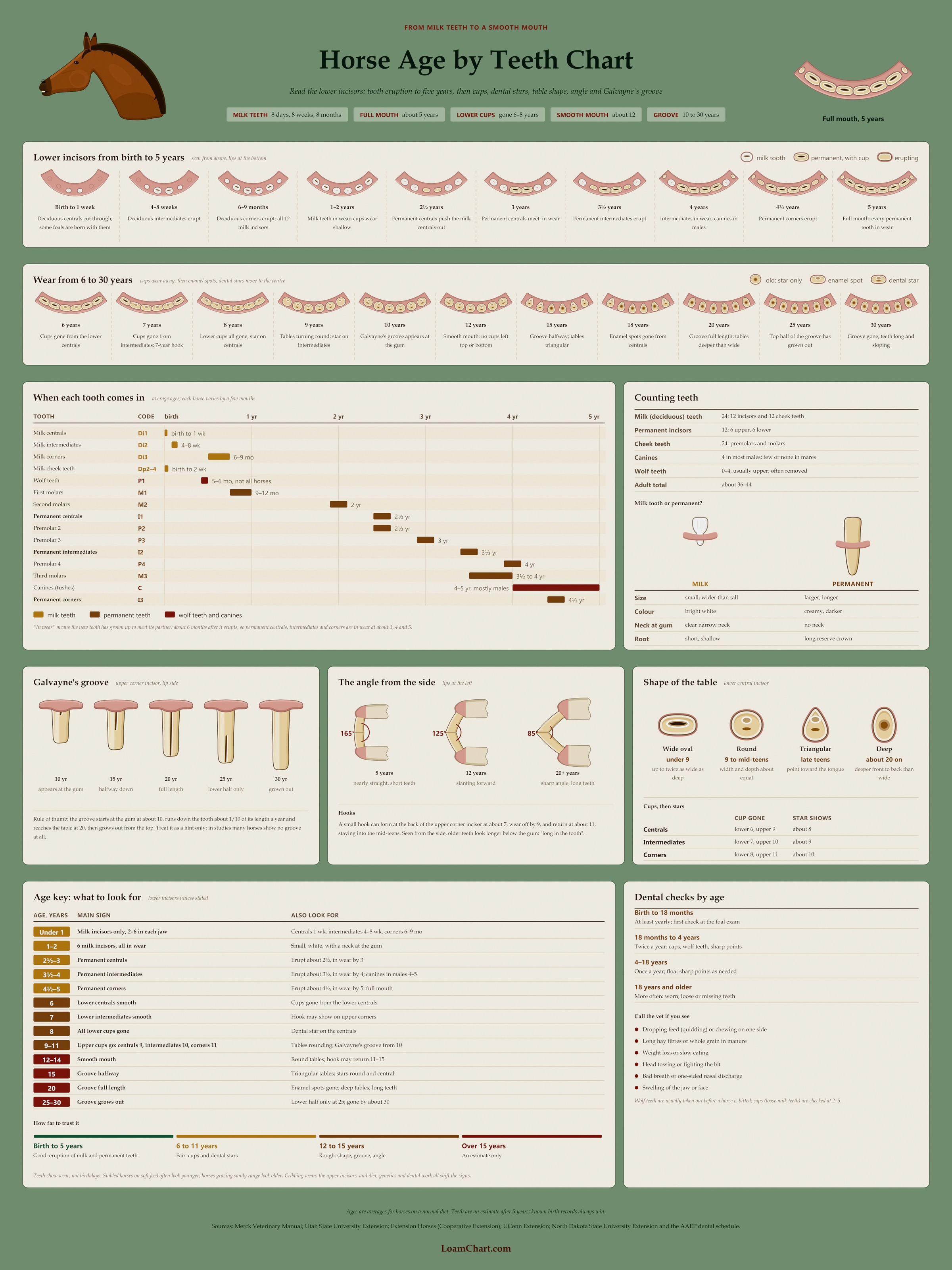
Up to five years the eruption of teeth is the most reliable sign of age. Foals get their milk incisors at roughly 8 days, 8 weeks and 8 months; the permanent incisors replace them at about 2½, 3½ and 4½ and come into wear about six months later.
| Tooth | Code | Erupts | Birth to 5 years |
|---|---|---|---|
| Milk centrals | Di1 | birth to 1 wk | |
| Milk intermediates | Di2 | 4–8 wk | |
| Milk corners | Di3 | 6–9 mo | |
| Milk cheek teeth | Dp2–4 | birth to 2 wk | |
| Wolf teeth | P1 | 5–6 mo, not all horses | |
| First molars | M1 | 9–12 mo | |
| Second molars | M2 | 2 yr | |
| Permanent centrals | I1 | 2½ yr | |
| Premolar 2 | P2 | 2½ yr | |
| Premolar 3 | P3 | 3 yr | |
| Permanent intermediates | I2 | 3½ yr | |
| Premolar 4 | P4 | 4 yr | |
| Third molars | M3 | 3½ to 4 yr | |
| Canines (tushes) | C | 4–5 yr, mostly males | |
| Permanent corners | I3 | 4½ yr |
4.Reading Galvayne's groove
Galvayne's groove is a dark furrow on the lip side of the upper corner incisor. By the classic rule it appears at the gum at about 10, reaches halfway at 15 and the full length at 20, then grows out from the top and is gone by about 30. Set how far the groove runs and where it starts.
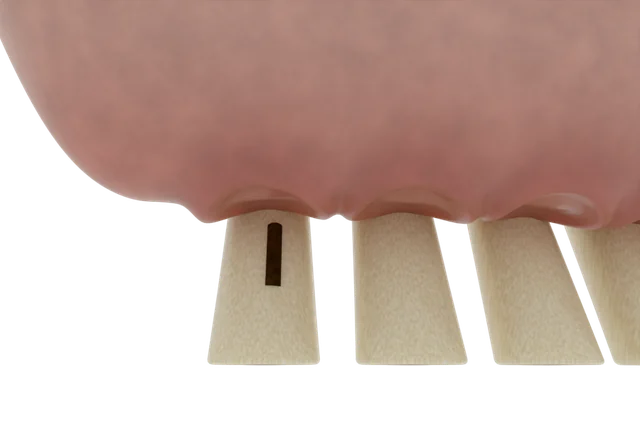
Studies have found the groove in only some horses and at varied ages, so Merck calls it of little value on its own. Use it with the cups, stars and table shape, never alone.
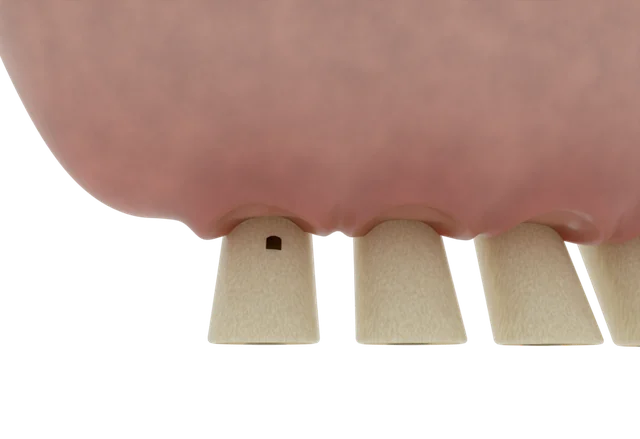
appears at the gum
halfway down
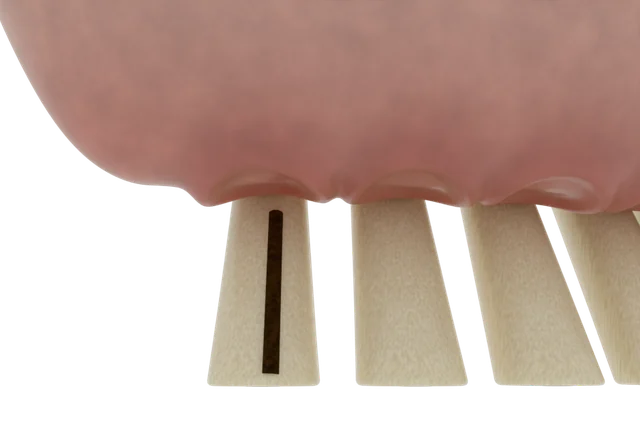
full length
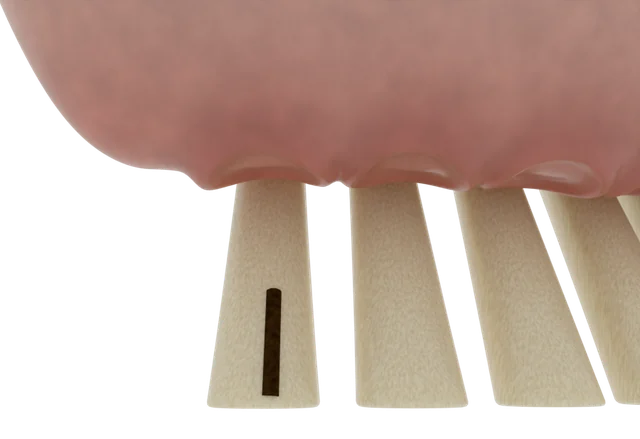
lower half only
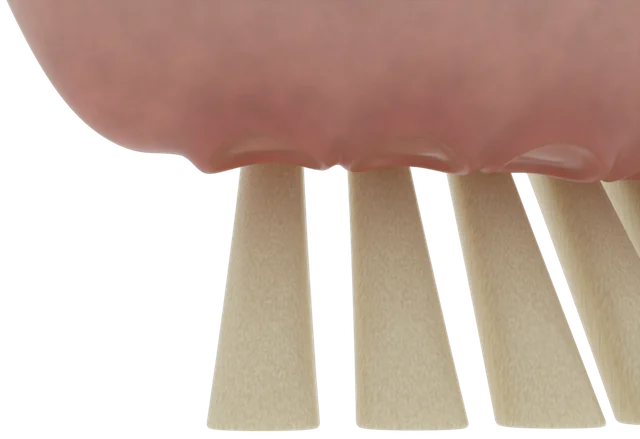
grown out
5.Cups, stars and the shape of the table
An incisor is a long tooth that keeps erupting as its biting surface, the table, wears down about 2–3 mm a year. Its cross-section changes along its length, so the table changes shape with age: wide when young, then round, triangular and finally deeper than it is wide.
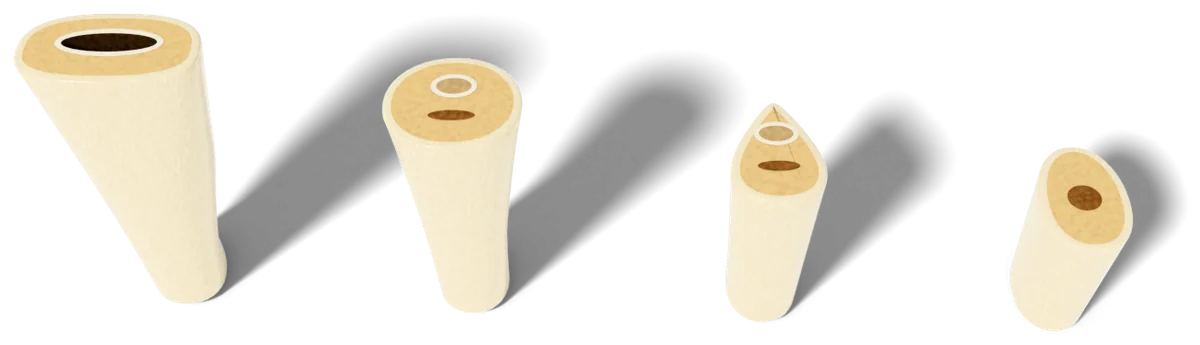
| Incisors | Lower | Upper | Dental star |
|---|---|---|---|
| Centrals | 6 | 9 | about 8 |
| Intermediates | 7 | 10 | about 9 |
| Corners | 8 | 11 | about 10 |
The cup is a dark, enamel-lined pit in the middle of a young permanent tooth. It wears away first from the lower centrals at 6, then the intermediates at 7 and the corners at 8; the upper cups are deeper and last to 9, 10 and 11. A horse with no cups left is called smooth-mouthed, at about 12.
The dental star is a yellow-brown mark nearer the lip edge of the table where the pulp cavity has filled in. It starts as a thin line at about 8 on the centrals and moves to the middle of the tooth as a round dark spot in old age.
The small enamel spot left at the bottom of the cup lasts longer than the cup itself: it is gone from the centrals at about 18 and from all incisors by about 20.
6.Milk teeth and permanent teeth
Telling milk teeth from permanent teeth is the key to ageing a young horse. A well-grown two-year-old can pass for older if its milk teeth are taken for permanent ones.
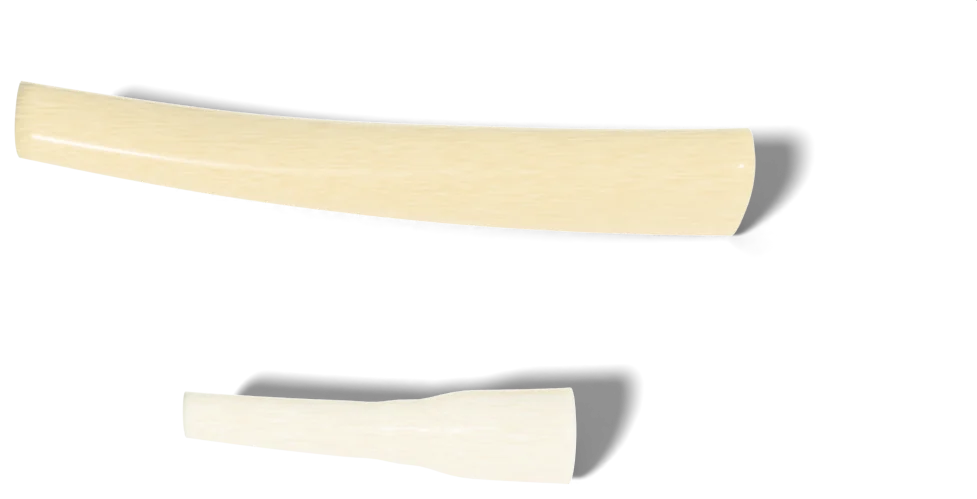
| Milk | Permanent | |
|---|---|---|
| Size | small, wider than tall | larger, longer |
| Colour | bright white | creamy, darker |
| Neck at gum | clear narrow neck | no neck |
| Root | short, shallow | long reserve crown |
| Milk (deciduous) teeth | 24: 12 incisors and 12 cheek teeth |
|---|---|
| Permanent incisors | 12: 6 upper, 6 lower |
| Cheek teeth | 24: premolars and molars |
| Canines | 4 in most males; few or none in mares |
| Wolf teeth | 0–4, usually upper; often removed |
| Adult total | about 36–44 |
7.Angle, hooks and length of tooth
Seen from the side with the lips parted, the upper and lower incisors of a young horse meet almost in a straight line, at about 160–180°. As the teeth erupt and wear, they slant forward, and in an old horse they meet at less than a right angle. Older teeth also show more length below the gum: the horse is "long in the tooth".
A small hook can form on the back edge of the upper corner incisor where it overhangs the lower one. It often first shows at about 7, wears off by 9, and may return at about 11 and stay into the mid-teens. It varies a lot between horses, and is also worn off by dental work, so treat it as a minor sign.
| Age | Angle | What you see |
|---|---|---|
| 5 years | about 165° | nearly straight, short teeth |
| 12 years | about 125° | slanting forward |
| 20+ years | about 85° | sharp angle, long teeth |
8.Dental checks through a horse's life
Horse teeth erupt and wear all their lives, so uneven wear makes sharp points, hooks and ramps that cut the cheeks and tongue. A vet's oral exam, with the teeth floated (filed) as needed, keeps a horse eating well. The busiest years are 2 to 5, when 24 milk teeth are shed and up to 44 permanent teeth come in.
Birth to 18 months
At least yearly; first check at the foal exam.
18 months to 4 years
Twice a year: caps, wolf teeth, sharp points.
4–18 years
Once a year; float sharp points as needed.
18 years and older
More often: worn, loose or missing teeth.
Signs that call for a dental exam
- Dropping feed (quidding) or chewing on one side
- Long hay fibres or whole grain in manure
- Weight loss or slow eating
- Head tossing or fighting the bit
- Bad breath or one-sided nasal discharge
- Swelling of the jaw or face
Schedule after the AAEP as given by NDSU Extension, and UConn Extension's age bands. Wolf teeth are usually removed before a horse is first bitted; loose milk caps are checked at 2–5.
9.How far a tooth age can be trusted
Teeth show wear, not birthdays. Before five the eruption timetable is dependable; after that every sign is an estimate that widens with age.
Stabled horses on soft feed often look younger than they are, while horses grazing sandy range wear their teeth faster and look older. Cribbing wears the upper incisors; parrot mouth and other bite faults change the wear pattern; and dental work removes hooks. Sources also differ by a year or so on cups and stars. Where a birth record, registration papers or a microchip exists, trust that over the teeth.
Sources and notes
Ages follow the classic sequence used by US extension services. The Merck Veterinary Manual lists the upper cups going first and the signs a year or so earlier, and warns that Galvayne's groove and the 7-year hook are inconsistent; where sources disagree the chart gives the common extension figures and the text says so.
- Merck Veterinary Manual. Estimation of Age by Examination of the Teeth in Animals.
- Utah State University Extension (Hoopes, Evans and Jack, revised 2020). Aging Horses by Their Teeth.
- Extension Horses, Cooperative Extension (Loch and Bradley). Determining the Age of Horses by Their Teeth.
- UConn Extension (Nadeau, EXT099). Basic Equine Dental Care and How to Detect Trouble.
- NDSU Extension (Hammer, after the AAEP schedule). Horses Need Dental Care, Too.