
Cattle Gestation Chart
A cow carries her calf for about 283 days, but breed, calf sex and her own age can move the date by a week or more. Work out a due date, compare 12 breeds, follow the calf month by month and know when calving needs help.
1.Working out the due date
Most herds count 283 days from breeding. Pick a breed to use its own average, and adjust for a first-calf heifer, the calf’s sex or twins if you know them. The list then gives every date worth writing on the calendar, from the first pregnancy check to the day she should be bred again.
Bull calves are carried about 1.2–1.5 days longer than heifer calves, so each shifts the average by under a day.

Today is day 145 of 283: month 5, 2nd trimester, 138 days to go. The calf is about 35 cm long, about the size of a large cat.
- Fri May 15, 2026Bredday 0
- Fri Jun 5, 2026Watch for a return to heatno heat suggests she is pregnant
- Fri Jun 12, 2026Earliest blood or ultrasound testultrasound from day 26–32
- Fri Jun 19, 2026Earliest rectal palpationroutine checks at 45–60 days
- Tue Jul 14, 2026Fetal sex visible on ultrasoundskilled operator
- Tue Aug 18, 20262nd trimester begins
- Fri Nov 20, 20263rd trimester beginsenergy needs rise about 21%
- Mon Feb 8, 2027Udder filling, mucus plug may passwatch more closely
- Mon Feb 22, 2027Due date
- Sat Apr 3, 2027Uterus recoveredabout 40 days or more
- Sat May 15, 2027Bred back byfor a calf every 365 days
2.Breed sets the length
Breed is the biggest single reason one cow calves earlier than another. Dairy breeds such as Holstein and Jersey average about 279–280 days, British beef breeds 282–284, the big Continental breeds 289–291 and Brahman 293, a gap of two weeks. Crossbred calves land between their parents.

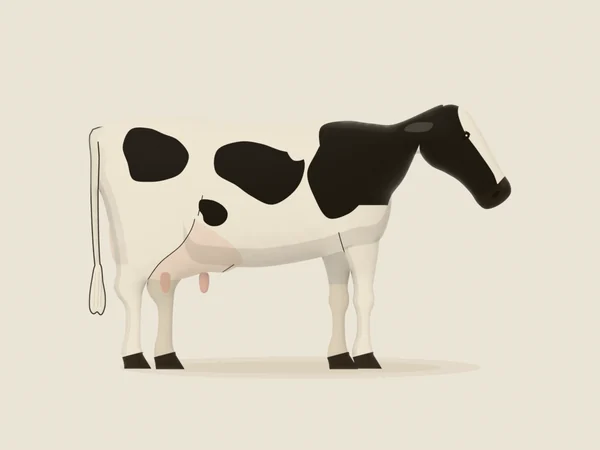
Holstein
Dairy · heifers 278279−4 vs 283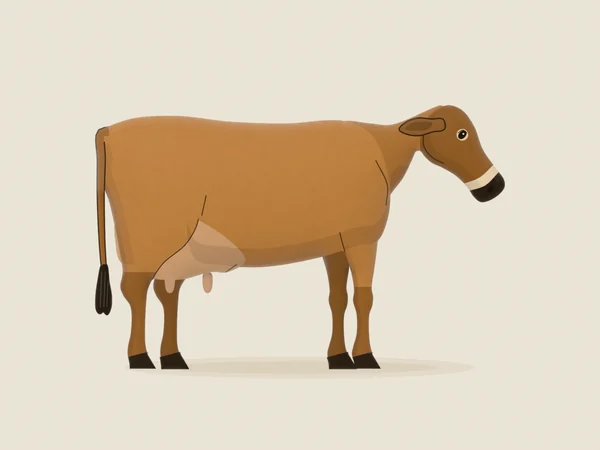
Jersey
Dairy · heifers 278280−3 vs 283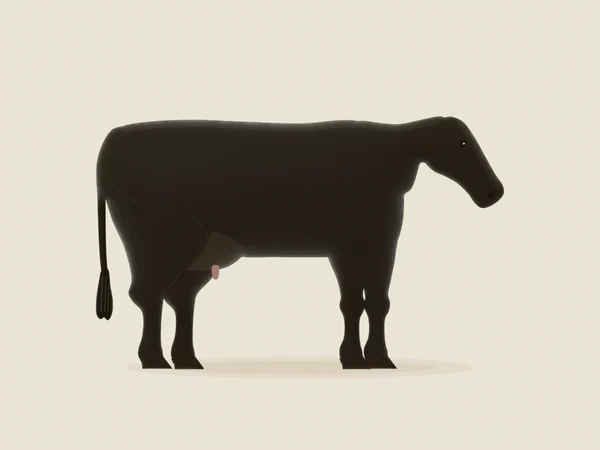
Angus
British beef · polled, black282−1 vs 283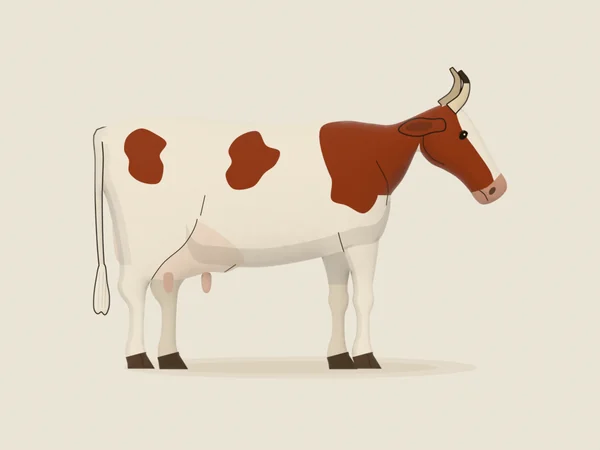
Ayrshire
Dairy · heifers 282282−1 vs 283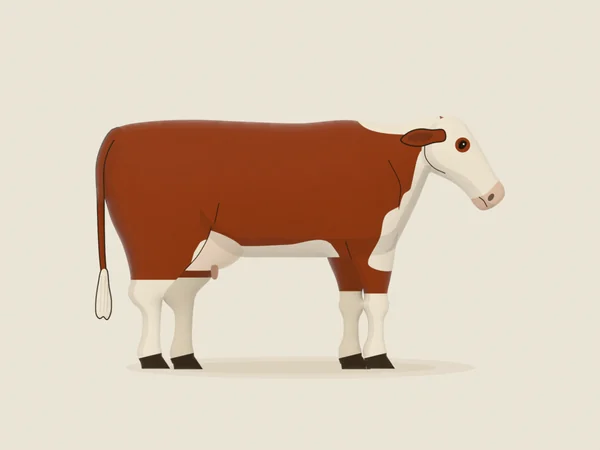
Hereford
British beef · red with a white face284+1 vs 283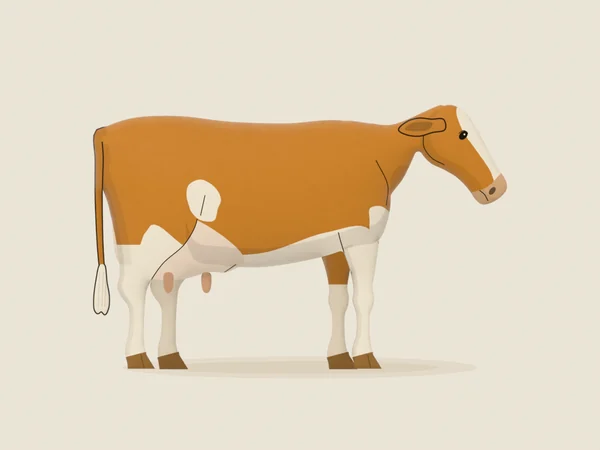
Guernsey
Dairy · heifers 285285+2 vs 283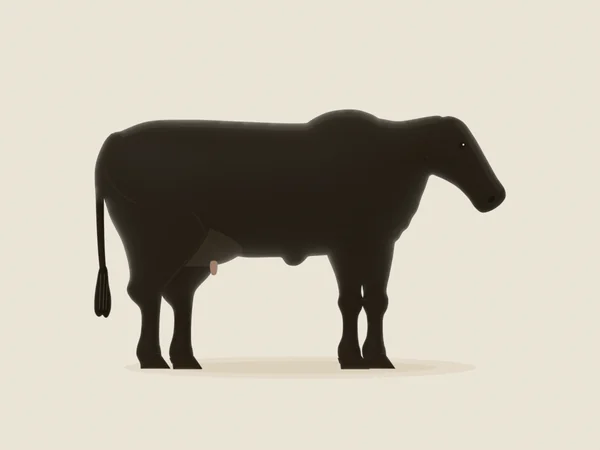
Brangus
Brahman cross · 3/8 Brahman, 5/8 Angus286+3 vs 283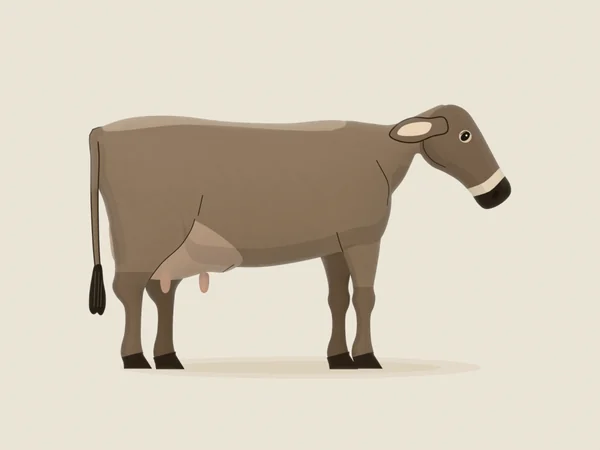
Brown Swiss
Dairy · heifers 287287+4 vs 283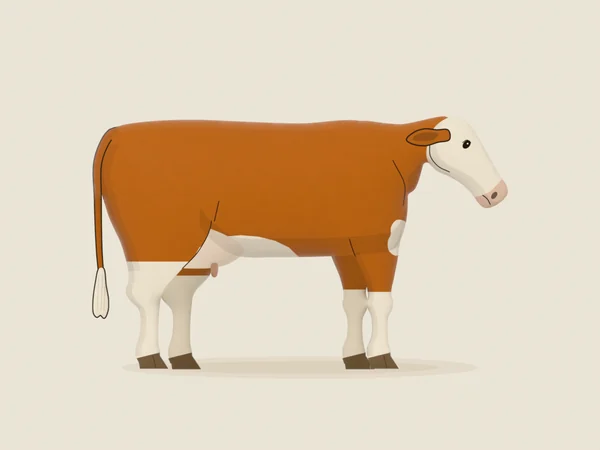
Simmental
Continental beef · Swiss origin289+6 vs 283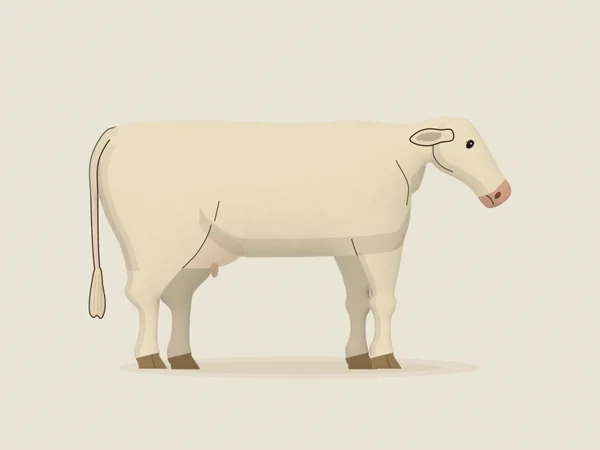
Charolais
Continental beef · French origin290+7 vs 283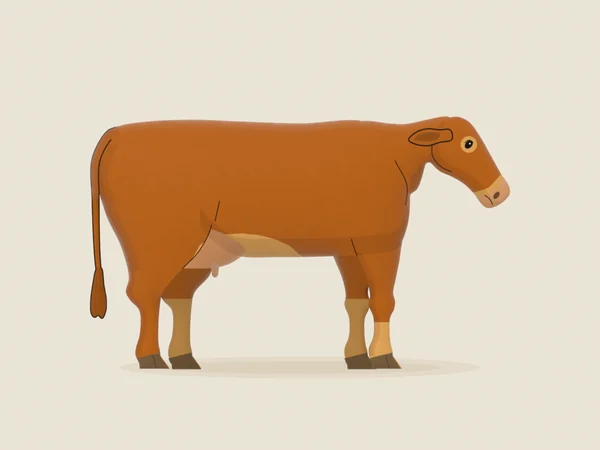
Limousin
Continental beef · French origin291+8 vs 283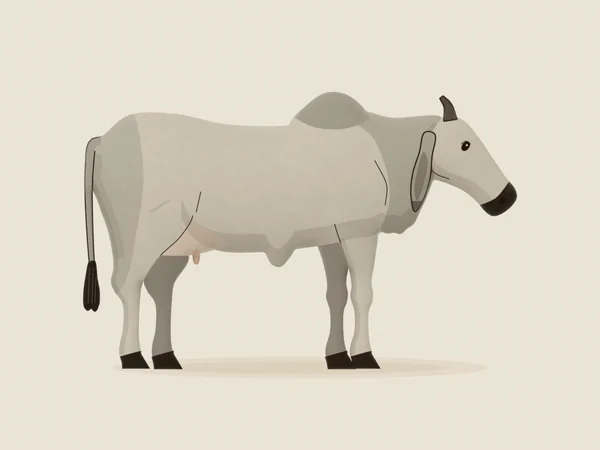
Brahman
Brahman · Bos indicus293+10 vs 283
Dairy breeds: purebred cows in US national records (Norman and others, 2009); heifers run about 1–1.6 days shorter. Beef breeds: calves sired by bulls of each breed in the USDA-MARC Germplasm Evaluation herds. Brangus: Southern Cooperative Series Bulletin 405.
3.Due dates for every breeding date
Pick the month she was bred to see the expected calving date for every day of it. The table uses 283 days unless you choose a breed, and it skips nothing: a February 29 breeding is listed in leap years only.
| Bred | Due | Weekday |
|---|---|---|
| May 1 | Feb 8 | Mon |
| May 2 | Feb 9 | Tue |
| May 3 | Feb 10 | Wed |
| May 4 | Feb 11 | Thu |
| May 5 | Feb 12 | Fri |
| May 6 | Feb 13 | Sat |
| May 7 | Feb 14 | Sun |
| May 8 | Feb 15 | Mon |
| May 9 | Feb 16 | Tue |
| May 10 | Feb 17 | Wed |
| May 11 | Feb 18 | Thu |
| May 12 | Feb 19 | Fri |
| May 13 | Feb 20 | Sat |
| May 14 | Feb 21 | Sun |
| May 15 | Feb 22 | Mon |
| May 16 | Feb 23 | Tue |
| Bred | Due | Weekday |
|---|---|---|
| May 17 | Feb 24 | Wed |
| May 18 | Feb 25 | Thu |
| May 19 | Feb 26 | Fri |
| May 20 | Feb 27 | Sat |
| May 21 | Feb 28 | Sun |
| May 22 | Mar 1 | Mon |
| May 23 | Mar 2 | Tue |
| May 24 | Mar 3 | Wed |
| May 25 | Mar 4 | Thu |
| May 26 | Mar 5 | Fri |
| May 27 | Mar 6 | Sat |
| May 28 | Mar 7 | Sun |
| May 29 | Mar 8 | Mon |
| May 30 | Mar 9 | Tue |
| May 31 | Mar 10 | Wed |
Calving dates are averages. In large herd records, individual pregnancies spread about 5 days either side of the breed mean.
4.The calf month by month
For the first two months the embryo is smaller than a mouse. By month six it is the size of a beagle, and about 70% of its growth comes in the last 60–90 days, which is why late pregnancy feeding matters so much. Choose a month to read what is happening inside.
Hooves are firm and distinct.
Bar heights show fetal length (crown to rump) to scale. Size comparisons follow the University of Florida Drost Project; landmarks are typical, not exact.
- Month 1days 0–30about 1 cm. Embryo about 9 mm long at day 28; heartbeat visible on ultrasound from day 26.
- Month 2days 31–605–8 cm, a mouse. Hooves start to form; the calf’s sex can be seen on ultrasound by about day 60.
- Month 3days 61–90about 14 cm, a rat. The four stomachs are recognizable; placentomes and the uterine artery pulse can be felt from about this month.
- Month 4days 91–120about 24 cm, a small cat; about 2 kg (4 lb). Hooves are firm and distinct.
- Month 5days 121–150about 35 cm, a large cat; 2.5–3 kg (5.5–6.6 lb). First tactile hairs appear on the lips, chin and eyelids.
- Month 6days 151–180about 46 cm, a beagle. Eyelashes grow; the body is still bare except around the lips and eyes.
- Month 7days 181–210about 60 cm. Hair grows on the tail switch, at the poll and around the hooves.
- Month 8days 211–24065–85 cm; 15–25 kg (33–55 lb) by day 240. Hair covers the back and the edges of the ears; growth is now fastest.
- Month 9days 241–28380–100 cm. A full hair coat; the calf turns into the birth position, front feet and nose first.
5.Confirming she is bred
A cow that does not come back into heat about 21 days after breeding is probably pregnant, but only a test confirms it. The earliest dates below are counted from the breeding date in the calculator.
| Method | From | Notes |
|---|---|---|
| Ultrasound | 26–32 days | Embryo and heartbeat visible from about day 26; open cows reliably found at 28–32 days. |
| Blood or milk test (PAG) | 28 days | Pregnancy proteins rise quickly between days 24 and 28. |
| Rectal palpation | 35 days | Membrane slip from about day 30 in heifers; most herds check at 45–60 days. |
| Fetal sex by ultrasound | about 60 days | Needs a skilled operator. |
| Uterine artery and placentomes | 3rd month | The pulse (fremitus) and placentomes help age the pregnancy. |
Your check dates
Bred on May 15, 2026 (from the calculator above).
- Watch for a return to heatJun 5, 2026
- Blood or milk testJun 12, 2026
- Ultrasound (most reliable from day 30)Jun 14, 2026
- Rectal palpation by a vetJun 19, 2026
- Routine herd check window opensJun 29, 2026
- Fetal sex by ultrasoundJul 14, 2026
- Routine herd check window closesJul 14, 2026
6.Heat cycles and breeding back
A calf a year leaves room for only 82 days between calving and conception, since 283 of the 365 go to pregnancy. Brahman-type cows, with a longer pregnancy, have about 73. The uterus alone needs about 40 days to recover, so there is little slack.
Breeding back after calving
- Uterus recovered (about)Apr 3, 2027
- First heat, earliest typicalApr 3, 2027
- First heat, latest typicalApr 23, 2027
- Bred by, for a calf every 365 daysMay 15, 2027
- Next calf due, if bred that dayFeb 22, 2028
First heat comes 40–60 days after calving in well-fed cows and can take 100 days or more in thin ones. Aim for body condition score 5 at calving (6 for first-calf heifers).
Next heats
- Heat 1: expect aboutMay 15, 2026 (May 12 to May 18)
- Heat 2: expect aboutJun 5, 2026 (Jun 2 to Jun 8)
- Heat 3: expect aboutJun 26, 2026 (Jun 23 to Jun 29)
Cycles run 17–24 days (heifers 17–21, cows 18–24). Standing heat lasts about 15 hours (6–24), and 70% of mounting happens between 6 pm and 6 am, so watch early morning and late evening.
| 21 days | average cycle; normal range 17–24 days |
|---|---|
| 15 hours | average standing heat, range 6–24 hours; heifers stand longer and more often than cows |
| 24–32 h | from the start of standing heat to ovulation |
| Day 17 | the corpus luteum breaks down if she is not pregnant, and the next heat builds over about 4 days |
| 35 lb | weaning weight lost for each 21-day cycle a cow calves later in the season |
7.Calving signs, stages and help
Most cows calve without help, but first-calf heifers need assistance far more often: about 10–15% of them, against 3–5% of mature cows. Knowing the normal timing of each stage is what tells you when to step in.

Signs that calving is near
- 12–3 months beforeFirst-calf heifers start to develop an udder, sometimes this early.
- 2About 2 weeks beforeThe udder fills; the cervical mucus plug may be lost, though it can come weeks early.
- 3About 24 hours beforePelvic ligaments beside the tailhead go slack; easiest to see in thin or moderate cows.
- 42–3 days to neverTeats fill and strut, but only reliably in heavy milkers.
- 5About 12 hours beforeShe may isolate herself, skip feed, raise or switch her tail.
Many signs are unreliable on their own: some cows show almost nothing until labor starts.
The three stages of labor
- 1The cervix opens2–6 hours, sometimes 30 minutes to 24 hours; longer in heifers. Restless, tail raised, mucus, standing apart from the herd.
- 2The calf is deliveredAbout 30 minutes in cows and about 1 hour in heifers (Oklahoma State research). Starts when the water bag shows; front feet come first, soles down, with the nose on top.
- 3The afterbirth passes30 minutes to 8 hours after the calf. Membranes still attached after 12 hours count as retained: call your veterinarian rather than pulling them.
Labor check
Call for help when
- No progress 30 minutes after the water bag or feet appear in a cow, or 1 hour in a heifer
- The calf is not delivered within 2 hours of the feet showing
- Only one leg, the tail, the head alone or upside-down feet are showing
- Hours of stage 1 straining with nothing showing
- The afterbirth is still hanging after 12 hours
- She is weak, bleeding heavily or stops trying
These are general rules from extension and veterinary sources. Your own veterinarian’s advice for your herd comes first.
8.Heifers, bull calves and twins
Three things besides breed move the calving date: the dam’s age, the calf’s sex and the number of calves. None is large, but together they explain why a heifer carrying a heifer calf can calve several days before a mature cow carrying a bull.
| First-calf heifer | Mature cow | |
|---|---|---|
| Gestation | about 1.5–2 days shorter | breed average |
| First breeding | 13–15 months, at 65–70% of mature weight | yearly, about 82 days after calving |
| Body condition at calving | score 6 | score 5 |
| Needs help calving | 10–15% | 3–5% |
| Stage 2 labor | about 1 hour | about 30 minutes |
| Breeding season | start at least 3 weeks before the cows | main season |

- +1.2 to 1.5 dayslonger for bull calves than heifer calves (Angus and Simmental records)
- 4.7–5.6 daysshorter for twin pregnancies than single calves
- about 1 lbextra birth weight for each extra day in the womb, often 2 lb in large breeds
9.Feeding the pregnant cow
A cow’s needs follow her calendar. Early pregnancy overlaps with nursing last year’s calf, the middle third is the easiest, and from the second to the third trimester she needs about 21% more energy and 12% more protein to keep up with the calf.
| Stage | Dry matter, lb per day | Crude protein, % of diet | TDN, % of diet |
|---|---|---|---|
| 1st trimester (still nursing) | 30 | 9.5% | 57% |
| 2nd trimester (dry) | 22 | 7.5% | 50% |
| 3rd trimester | 25 | 7.5% | 54% |
| Early lactation, after calving | 33 | 10.4% | 59% |
From Hall 2025, adapted from Lalman and Holder 2024. TDN is total digestible nutrients, a measure of energy. Pregnant heifers need richer diets because they are still growing.
Sources and notes
Figures are averages from extension services, breed research and veterinary references. Individual cows vary, and a calving that is not progressing is always a reason to call your veterinarian.
- Beef Improvement Federation, BIF wiki: Gestation Length (Angus and Simmental averages, calf sex and dam age effects)
- B. Freking, Oklahoma State University Extension: Calving interval and gestation length, with USDA-MARC Germplasm Evaluation breed data
- H. D. Norman and others, 2009: Genetic and environmental factors that affect gestation length in dairy cattle. Journal of Dairy Science 92:2259–2269
- Southern Cooperative Series Bulletin 405 (S-243, S-277): A compilation of research results involving tropically adapted beef cattle breeds
- University of Florida Drost Project: bovine reproduction, pregnancy diagnosis and fetal aging
- Merck Veterinary Manual: Pregnancy determination in cattle; Management of calving in cattle
- University of New South Wales Embryology: Bovine development (fetal landmarks by month)
- C. H. Krog: Age assessment of the bovine fetus (citing Roberts 1986 fetal weights)
- Mississippi State University Extension P2616: The estrous cycle of cattle; P2488: Replacement beef heifer development
- University of Wisconsin-Madison Extension: Estrus detection and estrus detection aids
- Nebraska Extension BeefWatch, Rasby and Meyer 2023: Cow herd report card II
- SDSU Extension: Nutritional needs prior to calving
- Texas A&M AgriLife Extension E-246: Recognizing and handling calving problems
- Beef Quality Assurance, J. Herman 2022: Monitoring calving stages and when to intervene
- Oklahoma State University Extension: Calving time management for beef cows and heifers
- G. Selk, Oklahoma State University, in Progressive Cattle: Signs of impending calving in cows or heifers
- Oregon State University Extension, B. Cappellozza: Strategies for developing replacement heifers
- H. Smith Thomas, Hereford World 2014: 283 days, gestation length and birth weight
- J. B. Hall 2025, Applied Reproductive Strategies in Beef Cattle: Cow herd nutrition during pregnancy (adapted from Lalman and Holder 2024)